
Walking | Thinking
Walking mostly happens in the mind

Marche Oggi Marketplace, Ottawa City Hall, Ottawa, ON.
Good morning from the café at the Ottawa City Hall. There is a council meeting today, including a silly motion on sidewalks. I’m trying to go to some of these meetings as a way to get a sense of what is happening in the city. Right now they are in Camera (closed session), so I’m here in the café drinking coffee and tapping away on my phone keyboard.
I’ve been thinking about thinking. I wasn’t trying to, believe me. These things just happen sometimes. I guess thats the point of this weeks post.
Walking | Nothing
There are many reasons to walk. Walking is fun. Walking is good for you. Walking is relaxing.
An underappreciated reason is that walking is one of the best ways to do nothing. Walking is active idleness, to use a phrase from writer and neuroscientist Shane O’Mara’s book In Praise of Walking. Walking, unlike other physical activities, doesn’t require a lot of focus, it just happens. But walking still provides just enough activity that it is hard to do other things.
Nothing is a surprisingly hard thing to do. People put a lot of effort into doing nothing, or trying to do nothing, they do yoga, they go on meditation retreats. It is getting harder to do nothing. Nothing’s cousin, boredom, is in decline, according to a recent article in The Economist. Between the entrancing power of screens, and the constant busyness of work and life. We rarely get moments without anything happening. If we do, the phone is right there, ready to intervene.
I’ve written about this before.
How to do Nothing

We seem to be living in a moment of backlash against our phones. There were recently a bunch of Substack articles by people who had switched to dumb phones. (Then there were a bunch of posts making fun of all of the dumb phone articles.) On today's walk I listened to a episode of
Creating | Wandering
One thing I’ve discovered while writing about walking is that writing about walking is nearly impossible. Between the mind wandering and nothing happening, what actually are you supposed to write down. I think this is why writing on walking usually ends up being writing about place.
The wandering mind is very hard to capture in words. It flies around, barely alighting anywhere. There is a reason we refer to this sort of unstructured thinking as mind wandering. It would take a better writer than me to record these mental flitings with any sort of accuracy. Its hard even to keep track of them while it is happening. The wandering mind is always one step ahead of conscious thought.
We have two essential modes of thought, notes O’Mara. A focused mode, and a ‘default’ blank mode. They each have their merits. The focused mode allows us to answer questions directly. This wandering mind does not get enough credit. It has its own way of figuring things out. Relieved of the rigors of effort, it can explore, make new connections, and figure things out. We call this “creativity”.
I just finished listening to the new Michael Pollan book, “A World Appears”. The book is about consciousness, a fundamental but ultimately annoyingly slippery subject. One of the many researchers that Pollan met with while writing this book is Kalina Christoff Hadjiilieva. Hadjilieva studies and defends spontaneous thought, things like: daydreaming, mind wandering.
Pollan, Interviewed on an episode of the Ezra Klein show, said:
“Kalina edited this book, “The Oxford Handbook of Spontaneous Thought.” There is a history of spontaneous thought that looked at how incredibly creative people — composers, novelists — spent their days. They only worked four or five hours. They spent a lot of time in unstructured wandering, like walking.
We all know there’s a connection between creative thinking and walking. If you’re stuck in your writing or whatever else you’re doing, you’re much more likely to break through if you get up from the desk and take a walk instead of just worrying about the problem.”
Ezra asked Michael when he was most creative. The answer won’t surprise anyone here.
Walking, I would say. I walk a lot in the Berkeley Hills.
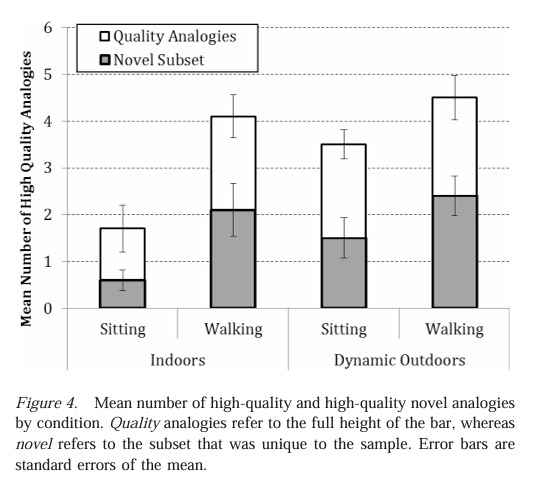
It’s not just Pollan. Research has shown that walking, especially walking outside, increases creativity. In one study, participants were asked to do a creativity excercise after sitting inside, walking inside on a treadmill, walking outside and being pushed outside in a wheelchair. While moving outside was good, walking was better.
How to do nothing.
There are things you can do with your walking practice that make it more likely you’ll enter and maintain this nothing headspace.
Walking alone is borderline necessary. Walk with someone else, or even with a dog, and it becomes very difficult to enter this headspace. The other person is simply too distracting. Silence is also key. If your headphones are in, that is what you will focus on. Unless it is something very boring. It also can take time to enter this headspace, I find it rarely happens in the first hour of a walk, so be patient, and don’t force it.
To maintain the empty headspace there are also some things you should avoid. Walk at your natural pace. If you are hurrying, you are doing something, and the mind will stop wandering. Be comfortable. If you are distracted by pain, or the need to use the washroom, the mind will be focused on the sensation and incapable of wandering. This is one of the reasons why rule 2 of walking is “Be Comfortable”.
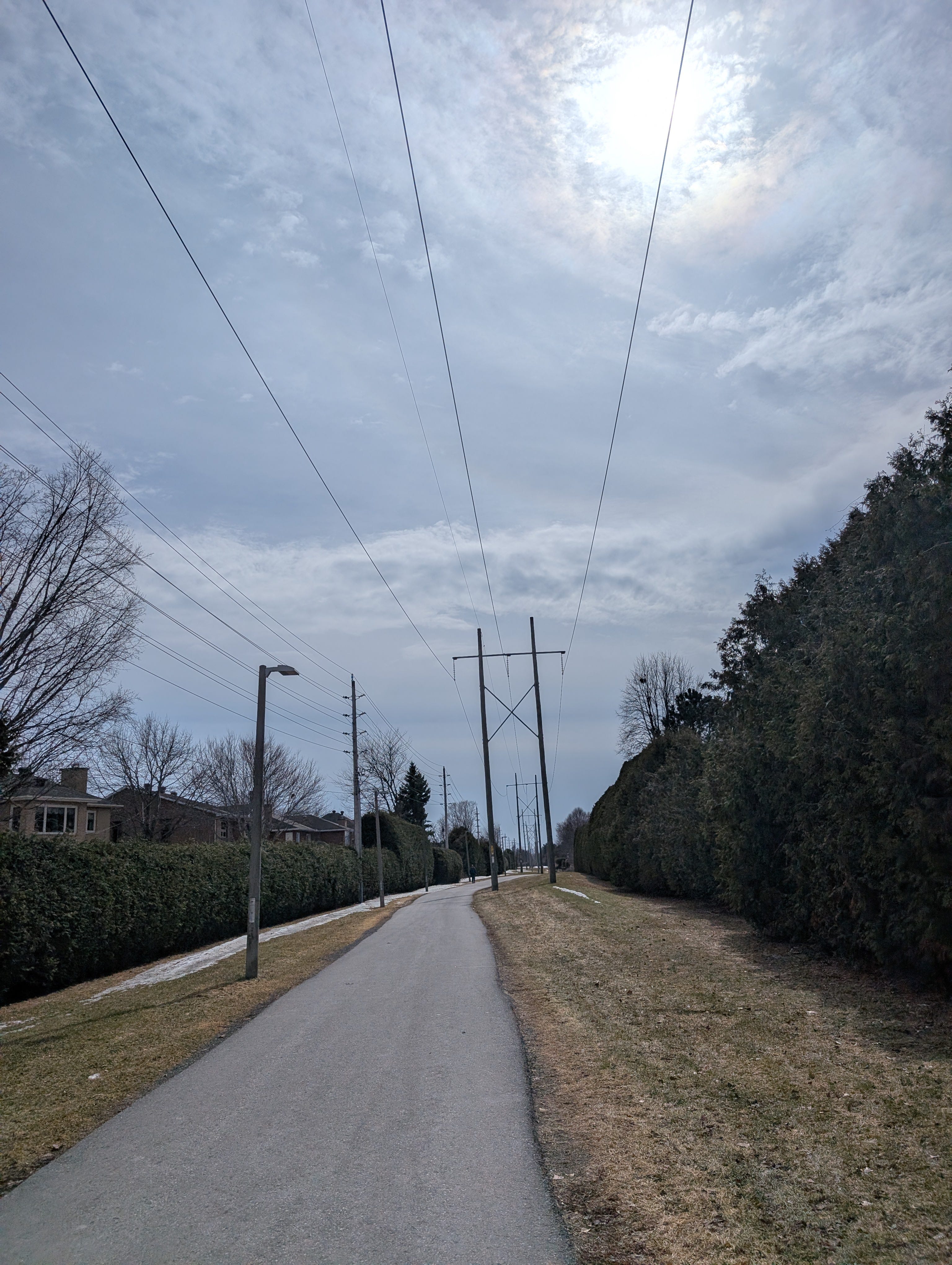
What doesn’t matter very much is where you walk. You certainly don’t need to go for a hike or into nature to achieve this headspace. It can happen just as easily on your own suburban street. Walking somewhere boring might even be better than walking somewhere interesting or beautiful.
Not all walks need to have nothingness at their center. Not all will. Some can be focused on exploration, or convivial social adventures, or just getting something for dinner. If you never engage in mind wandering while walking you are, genuinely, missing out.
Thats what I think anyway.
Happy Walking! | Happy Thinking!
-Chris